Monday, May 24, 2010

What Are the Causes of Environmental Pollution?


Environmental pollution is the introduction of contaminants into the environment that makes the environment unhealthy for habitation and on the extreme, can harm the ecosystem. The causes of pollution depend on the type of pollution under view.

Air pollution This is the release of polluting chemicals and particulates into the atmosphere. These pollutants makes it unhealthy to breathe in such air. Common air pollutants are sulfur dioxide, chlorofluorocarbons (CFC), carbon monoxide, and nitrogen oxides produced by industry and motor vehicles. When hydrocarbons and nitrogen oxides react to sunlight, smog and photochemical ozone are formed when nitrogen oxides and hydrocarbons react to sunlight.

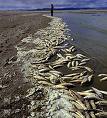
Water pollution When waste products and potential contaminants are released into river drainage systems and other water bodies making the water unfit or compromising the quality of the water for use by man or habitation of water fauna and flora, we have water pollution.

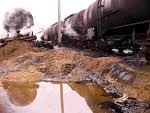
Soil Contamination occurs when chemicals are released by spill or underground leakage. Among The most significant soil contaminants are hydrocarbons, heavy metals, herbicides, pesticides and chlorinated hydrocarbons.

Radioactive contamination, resulting from 20th century activities in atomic physics, such as nuclear power generation and nuclear weapons research, manufacture and deployment.

Noise pollution, which encompasses roadway noise, aircraft noise, industrial noise as well as high-intensity sonar.

Light pollution, includes light trespass, over-illumination and astronomical interference.

Visual pollution, which can refer to the presence of overhead power lines, motorway billboards, scarred landforms , open storage of trash or municipal solid waste.

Thermal pollution, is a temperature change in natural water bodies caused by human influence, such as use of water as coolant in a power plant.

www.made-from-india.com maintains a trade directory that contains information on pollution control equipment exporter from India, pollution monitoring equipment supplier from India, air pollution control equipment exporters in India, air cleaning equipment, water treatment plant exporters, environment protection products supplier form business to business trade India.

Thursday, May 20, 2010

Cyclone Laila moves towards Orissa, rains in Andhra


Cyclone Laila weakened ahead of landfall about 30 km from Bapatla in Guntur district in Andhra Pradesh on Thursday but still left 16 people dead, flooded thousands of homes, snapped power supply in many areas and threw rail and road traffic out of gear in the coastal region of the state.

Though Laila's intensity reduced considerably, the winds blowing at a speed of 90-95 kmph continue to leave behind a trail of destruction, though not of the level that was feared before it made the landfall.

It rained all night in most parts of Bapatla in Guntur and even now it is raining, accompanied by strong winds.

While the depression is moving towards Orissa now, the Meteorological department has said that vigil should continue in coastal Andhra Pradesh today as well.

Under the influence of this system, widespread rainfall activity is likely over coastal Andhra Pradesh and Telangana and Orissa during next 24 hours.

The sea condition will be very rough along and off Andhra Pradesh and Orissa coast during next 12 hours. Fishermen have been are advised not to venture into the sea during next 48 hours.

Both Andhra Pradesh and Tamil Nadu are facing the onslaught of the tropical cyclone. At least 40,000 people have already been evacuated from low-lying areas of Andhra Pradesh. Armed forces have been asked to help the civil administration in rescue efforts.

Air, train and bus services were thrown out of gear in the state. The waves and the winds caused extensive damage in coastal districts like Nellore, where trees were uprooted, cars smashed and roads damaged. Communication and power supplies were also disrupted.

As heavy rainfall is expected in the coastal districts, the administration is keeping a watch on vulnerable structures like bridges and culverts.

The government has also put in place protocols and standard procedures for cyclone preparedness to minimise loss of life and property.

Reblog this post [with Zemanta]

Friday, May 14, 2010

Environment & pollution


Hybrid vehicles are the kind of automobiles that cause less or no environment pollution. In practicality, it is absolutely impossible to run an automobile without some kind of pollutant emission. At least, the technological developments so far cannot guarantee such a vehicle, but there are several methods to reduce the level of pollutant that is emitted.

Currently, the worst culprits of environmental pollution among vehicles are automobiles that run on fossil fuels such as petrol, diesel, and gas. That means more than 90% of these at present, are serious offenders of environmental protection. Among the environmental problems, air pollution and damaging effects of the Ozone Layer are the most serious. There have been concerted efforts from various sectors - such as automobile manufacturers, scientists, and governmental regulators - to reduce the green house gas emission from vehicles that run on fossil fuels.

The efforts have been producing good results. Newer models invariably have better emission controls. However, the overall level of green house gas emission has been increasing. The major reason for this is the exponential increase in the number of these cars in use. Over the last decade, the sale of automobiles has considerably increased - not just in the developed countries like the United States and Japan, but also in developing nations like China and India.

Therefore, just reducing the green house gas emission of cars that run on fossil fuels is not sufficient for reducing the level of environmental damage. This realization paved the way for the creation of several types of green vehicles. Examples of such environmentally friendly cars are electric, solar-powered, and those that use hydrogen fuel. Despite the obvious advantages to environmental protection, there are some negative aspects for them. The performance of hybrid cars at present does not compare well to that of cars powered by conventional fuels such as petrol, diesel, or gas. As a result, a kind of hybrid was born. This type of car can run on both conventional fuels and the non-conventional fuel types. Most of the major automobile companies in the world produce the hybrid type green vehicle.

The most commonly used non-conventional fuel is electricity. The market share of battery-powered cars has been expanding steadily. The level of green house gas emission is substantially lower for electric cars. However, in terms of performance, such as acceleration in high speed, these green vehicles pale in comparison with those that use fossil fuels. Therefore, the hybrids that run both on electricity and conventional fuels provide a compromise option between environmental considerations and the desire for better performance.

www.made-from-india.com maintains a trade directory that contains information on pollution control equipment exporter from India, pollution monitoring equipment supplier from India, air pollution control equipment exporters in India, air cleaning equipment, water treatment plant exporters, environment protection products supplier form business to business trade India.

Solar energy is also used to run automobiles. The mechanism of these cars is similar to that of electric, however, in the case of solar cars, electricity is provided by solar cells. Another kind of green car is the type that uses hydrogen as fuel. More research and innovations are needed to make the performance of these cars to match with that of those using conventional fuels.

Wednesday, March 3, 2010

The Menace of Environmental Pollution - The Way Forward

The environment is referred to as man's best friend in articles by great authors whom I had contact with before putting up this article. David McBash Phd, when asked what the environment is to man says "The environment is man's greatest resources regarding the fact that man also evolved from it according to evolutionary science".

Also environmental biologist, Theodore Finley says "Man is a complex organism made up of non-living components found in the environment and this in turn supports man".

In view of the mind striking excerpts from my tete-a-tete with these great people I decided to start off this month with man's best friend, "the environment". Finley's excerpt says that the environment supports man and in no way hazardous. This is a special feature of man as a higher animal, that is, being able to alter the surrounding to support or suit it. This is sometimes not the case where the environment becomes hazardous due to man's activities and the negligence to the menace of environmental pollution.

Here are some of the problems posed by environmental pollution and the way forward.

Noise pollution could be seen as unorganized sound that is unpleasant to the listener. Whether organized or unorganized, any sound that irritates the hearer is noise. The magnitude of sound is measured in decibels. Experts in this field measured the magnitude at which sound could be hazardous to be setting off from 45db. In homes, people now use theater systems whose magnitude is more than 45db. In the short term it is luxury or prestige but in the long term is sure to be hazardous ranging from minor hearing problems to deafness as a result of too much vibration of the middle and inner ear leading to the damage of the auditory nerves. Others are noise from road side record sellers, heavy factories and so on.

The way forward is controlling the sound systems in homes to a minimal no damage level. In case of industries they should be sited away from residential homes. Constant exposures to noise pollution should be avoided.

Research show that hearing problems are increasing at a geometric progression.

Refuse and sewage pollution is another great challenge to our environment. This is more seen in under-developed countries and third world countries where the level of poverty is higher.

Irregular disposal of refuse into culvert, around homes and along roads. Sewage such as waste water disposed directly into culvert, around homes and channeling through open surface canals. These are breeding grounds of disease causing pathogens and infections and disease the dwellers in such surroundings. No wonder malaria is so common in Africa.

Refuse can be burnt in incinerators in places some distances away from residential homes. Research shows that some of these gases irritates the lining of the nostrils and eyes giving rise to the multiple ocular problems. Sewage should be treated to harmlessness and surface channels closed properly. In homes dust and dirt should be disposed off properly in bins or trashes.

Industrial chemicals and fertilizers are also harmful to human population. Direct disposal of industrial chemicals into water bodies and washing of fertilizers into rivers and lakes by rain water poison the planktons on which fishes depend and in turn passes onto the fishes and to man as the food chain continues.

Air pollutants include gaseous pollutants like oxides of Carbon, Nitrogen, Sulphur and so on. The chlorofluorocarbons (easily referred to as CFCs) are no exception. This results in the greenhouse effect; the depletion of the ozone layer by greenhouse gases. The emission of these gases are increasing by the day with less green life to make use of them as a result of development. The amazon forest seems to be the forest standing whose conservation is a global challenge.

Tuesday, February 23, 2010

The Strange Discussions on Environment Pollution


The meetings for improving the Global environment seem to me more like the saying about "give a man a fish" but forget to "teach the fisherman to catch fish". Unless someone never lived in a developing country or undeveloped country he will not be able to understand how silly the whole conception of "taking" decisions to reduce pollution and make the World an environmentally friendly place looks like. Just imagine a poor old man in Bulgaria receiving next to nothing 120 USD monthly pension after had performed 30 years of professional work in a country where just your electrical power bill at its best topple 60 USD without electric heating, so try to convince him to save the environment by not burning coal that blows thick smoke more like an small power plant or burning wood by cutting any three he can get hands on. Or you can imagine a man in Brazil watching his kids sick of famine making up a small farming piece of land by clearing the jungle and destroying the Earth lungs, or you can see thousands in Somalia dying from famine taking over a large boat for ransom, so try to explain to him how bad it is for the whole worlds trade such an action.

But believe me that all of the above will be like a joke compare to just China and India going through so well known "industrial revolution" in the ways Western Europe, Japan and The US did go through?!?: the World will not survive it, NO SACKING WAY.

Ladies and gentleman buckle up for a ride the World has never experienced or may be not ever but at least in our "civilized" times.

No, I am not pessimistic or a epileptic either: I just happen to call collars with their real names, and these collars are not seemingly light, unless...unless we don't change the World: the system of Economics: Social Policies, Banking, Industrialization and etc., and the way we see and evaluate them.


Monday, February 22, 2010

Environmental Pollution -The Perils of Plastic


Human’s insistence on using plastics for every mundane activity is steering the world towards an environmental disaster. However, confrontation with the environment could be easily avoided, only if the humans knew that plastics are not a disposable.


Use of plastic bags is quite common among shoppers, despite the fact that they are aware of its ill-effects. Plastics are said to be one of the major toxic pollutants as they are biodegradable, and hence pollute earth, air and water.

It is impossible to dispose of plastic waste.

Both at the time of production as well as at the time of its disposal, plastics can cause severe damage to the environment. So the best way to combat the hazards of plastic is to cut down its use, and thereby help bring down its production.

The chemicals used in the manufacturing of plastics are highly toxic and pose a serious threat to all living beings on earth.

Benzene and vinyl chloride, used in plastics, are known to cause cancer, while many other hazardous elements are also present in plastics, in the form of gases and liquid hydrocarbons. In addition, plastic resins are flammable and have caused more than a few accidents worldwide.

The poisonous substances released during the manufacturing of plastics are synthetic materials such as ethylene oxide, benzene and xylenes. Apart from harming the eco-system, these chemicals can cause a range of maladies like birth defects, cancer, damage of the nervous system, blood and kidneys problems together with the weakening of the Immune system. And majority of these toxic substances are released even during the recycling of plastics.

However, what is hard to believe is that like other chemical substances, plastic disposal is just a myth. Once the plastic is manufactured, it cannot be disposed of by any means. Recycling, burning or land filling doesn’t really help.

Recycling only helps bring back the toxic waste into the marketplace and ultimately into the environment, thereby adding to the toxic waste.

And since plastic does not go through bacterial decomposition, using plastic for land –filling purposes only means we are preserving the poison forever.

There are a group of people who believe that plastics can be burned and thus the toxic waste could be easily rid off. However, this is not true. When plastic is burned, a whole lot of poisonous gases are released into the air, including dioxin, the most toxic substance known to science.

According to a study carried out by the Public Interest Research Group, based in Delhi, besides the dangers, recycling of a plastic is also too expensive, dirty and labour driven, Further recycling of plastic cause’s skin, and respiratory problems. Nonetheless, recycling of plastic doesn’t help much because the quality is pretty bad.

Plastics, again, choke drains thereby block urban sewage systems. The plastics discarded in rivers, seas pollute the air, water, soil and marine life. Clogged drainage systems become a breeding-ground for mosquitoes, apart from causing flood problems during monsoons.

Getting rid of plastics through landfills is also risky. On one hand, there is a high – probability of toxic seepage from the landfill causing contamination of water resources, while on the other plastic obstructs the flow of ground water. In case of landfills, cadmium and lead in the wastes mixes up with the rain water and then eventually the polluted water makes its way into nearby streams, lakes and water bodies.

The best way out of this danger is to make controlled use of plastics, if one can’t shun it altogether.

Saturday, September 13, 2008

Environment and Pollution

Environment & Pollution

Environmental Pollution is a fast expanding hazard. It is the least understood ecological factor in terms of economy. Pollution is the unavoidable price; we have to pay for our progress in industrial development and modernization of the society for economic development. Urbanization and industrialization have contributed much to environmental pollution.

Made-from-India.com maintains a trade directory that contains information on pollution control equipment exporter from India, pollution monitoring equipment supplier from India, air pollution control equipment exporters in India, air cleaning equipment, water treatment plant exporters, environment protection products supplier form business to business trade India


Environment and Pollution Directory